1st of June, 2023.
Hitchhiking in India: Ladakh
I walk in the wrong direction. Laugh. I stop by a hotel and ask help to write my new sign: Pangong Lake. I drop one of my socks (yep, again), and have to come back looking for it. And all this while in the wrong direction. Luckily, at some point, somebody gives me the bad news, so I turn around.
The views around here are great and now I understand why so many people come to Leh.
A nice man offers to drive me a short distance, but because where I am standing is not really a good spot for hitchhiking, I accept.
Where he drops me off, there are a few restaurants. In one of them, I ask if they have any left-overs they can give me, and they say they have some extra parathas, which I gladly accept.
I keep walking. I eat my parathas at some point. It takes some time until somebody stops.
He is a very nice and considerate man. He also knows a lot about the situation around Ladakh and what is going on with the road blocks. He is the one to tell me about the fee you must pay to visit Pangong Tso. It is something you must pay to use the road, and not an entrance fee for the lake itself. What makes everything absurd it is the conditions of the road. How in heaven, anyone would charge someone for the most terrible roads in the world, I don’t get it. And there’s also the fact that, apparently, you must apply online, pay online, and then you will print this kind of certificate allowing you to enter the area. Bullshit! This nice man can only drop me off at Karu, a very important “turning point” around here. It is a kind of intersection from where you go either to Pangong Tso or to Manali. And when you are coming back from the lake, you either go left to Manali or right to Leh. The nice man tries to give me five thousand Rupees. I kindly refuse. Before reaching Karu, he stops in a shop and by me some juice, water and cakes. There’s nothing I can do to refuse, so I take it.

In Karu, I talk with a very nice police officer who is a woman. I explain everything to hear and we talk about my possibilities. First of all, the road is already blocked. For the same reasons as before: bad weather and one line of cars only. This is my third road block in North India. They open at 6 a.m. and close around noon. She tells me that there is a possibility that the officers might not ask for my permit, if I explain everything to them. Then she tells me I can take another route, which is longer but it takes almost the same time because the roads are better. Plus, this route is open now. I trust her, and I go over there and try for a while, but without success. Luckily, because I think this other route would actually take a long time.
I come back to the barricade and explain to the police officer that, if I manage to get just to the next village, where I can camp for the night, tomorrow, early morning, I can resume my journey. She trusts me and even help me to find a local who can take me a bit further. At this moment, I meet an extraordinary figure.
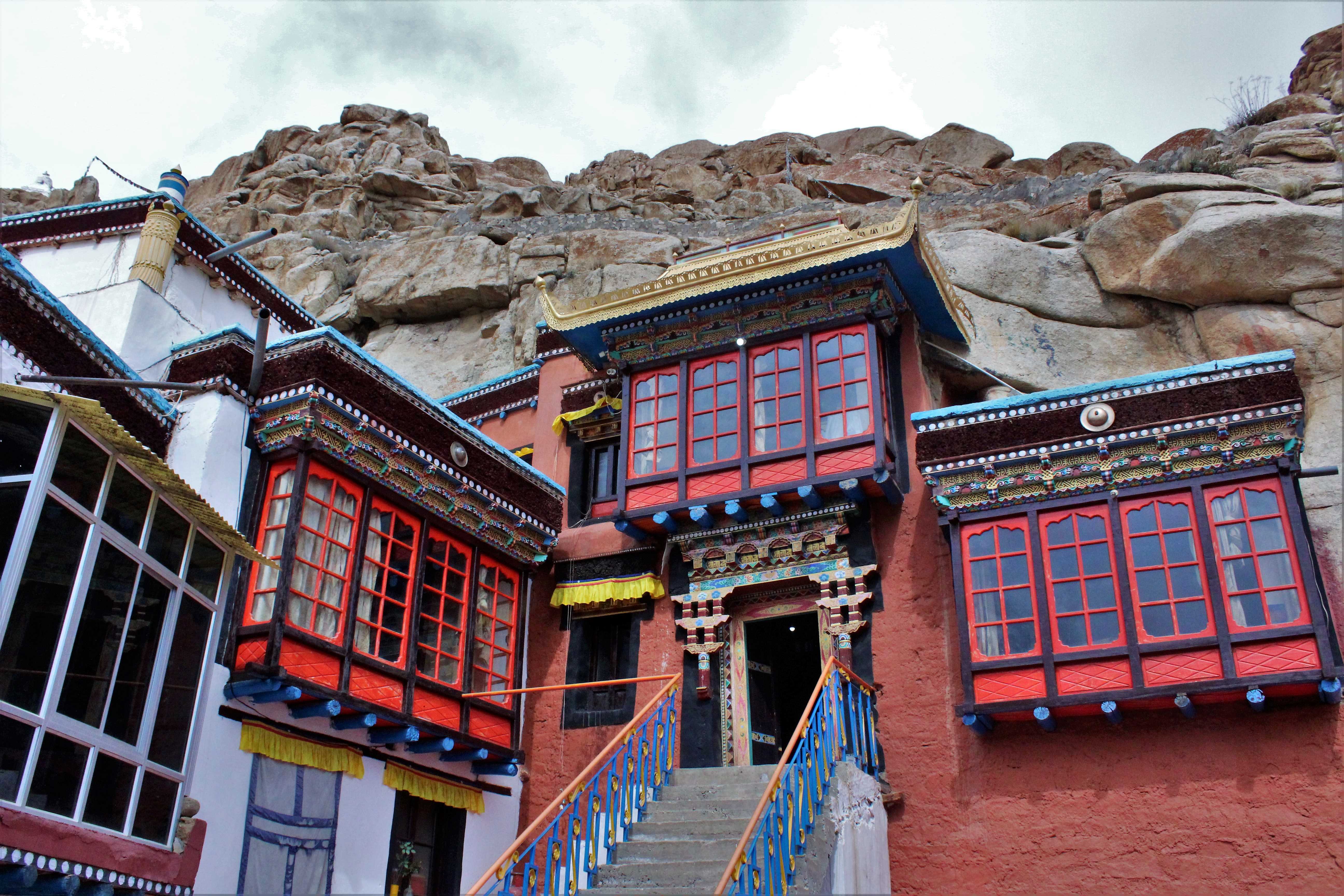
I don’t have his name, either a photograph, which is a shame. He is like one of those characters in the movie, who knows everything, and always find a way to get what he wants, in the best sense of this phrase, of course. He is very young though, only 24 years old, but he was born and raised in this region. He has big plans of increasing his business and becoming someone big. Right now, he is going to deliver some bricks to a monastery nearby a village called Sakti. When I tell him everything about me, he promptly offers to help me. He tells me that, there isn’t only one check point for the permit, but a few, and he knows a way to go around some of them, through Sakti. While I am waiting for him to deliver the bricks, I walk to the monastery and ask a monk if I could stay there. He agrees and I tell him that I might come back. But when I talk with my lovely guide about it, he says that we are a bit far from the main road to Pangong Tso, so we go back, taking the detour through the village and scaping the check-points. He explains to me, in a very nostalgic tone, how everything has changed around here. According to him, before there were no roads at all, and he would just cross the fields by walking, Of course, nowadays that’s not possible anymore because of all the fences. I agree with his thoughts when he says that, when people start to put up fences, we start to segregate ourselves from others and from the world.
We chose a small area, with only a few houses around, where I can ask for shelter for tonight. He shows me where is the road to Pangong Tso, all the way uphill, and how to get there.
I walk across some fields, finding my way where there isn’t one. When I am coming near to one of the houses, a young man walks in my direction. To my surprise, he can speak a great English, so we start to talk. He promptly says I can stay in his parent’s house. He doesn’t live here and is just visiting, but he will arrange everything with them. That’s very kind!
They live in a big, two-storey house. The funny fact about these houses in Ladakh is how they are actually very modest inside. This family house, for example, has no inside toilet, only a pin latrine outside. In Brazil, if you ever see a house this size, everybody will know that it is a very fancy house, both outside and inside. Nobody in Brazil would go through the trouble of building such a huge house without knowing that they could make it nice and fancy in both ways.
The only heated room is the kitchen, with an improvised wooden stove in the middle. There are places to sit around the fire, and that’s where we stay. I will also sleep here, while the parents will stay in their bedroom.
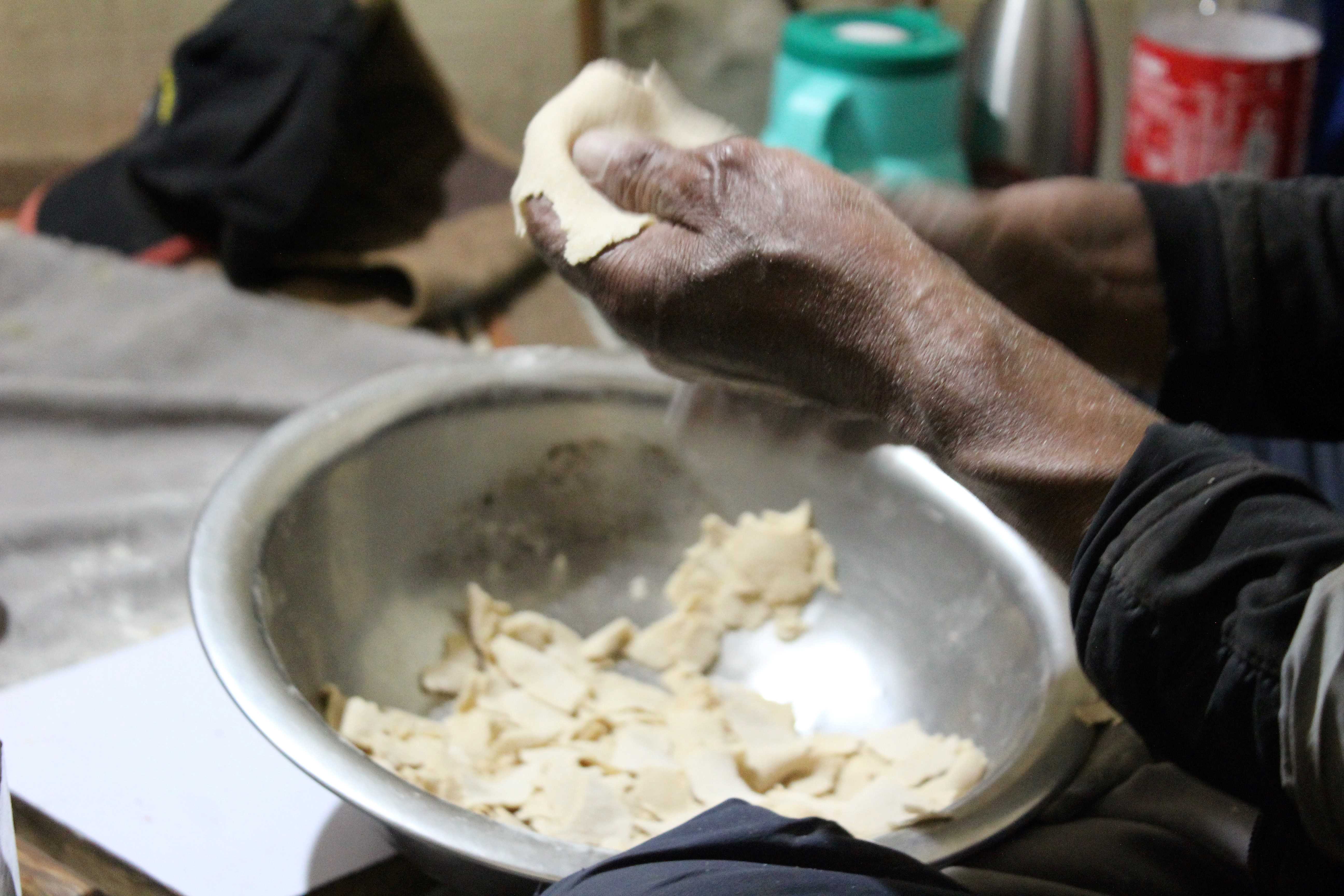
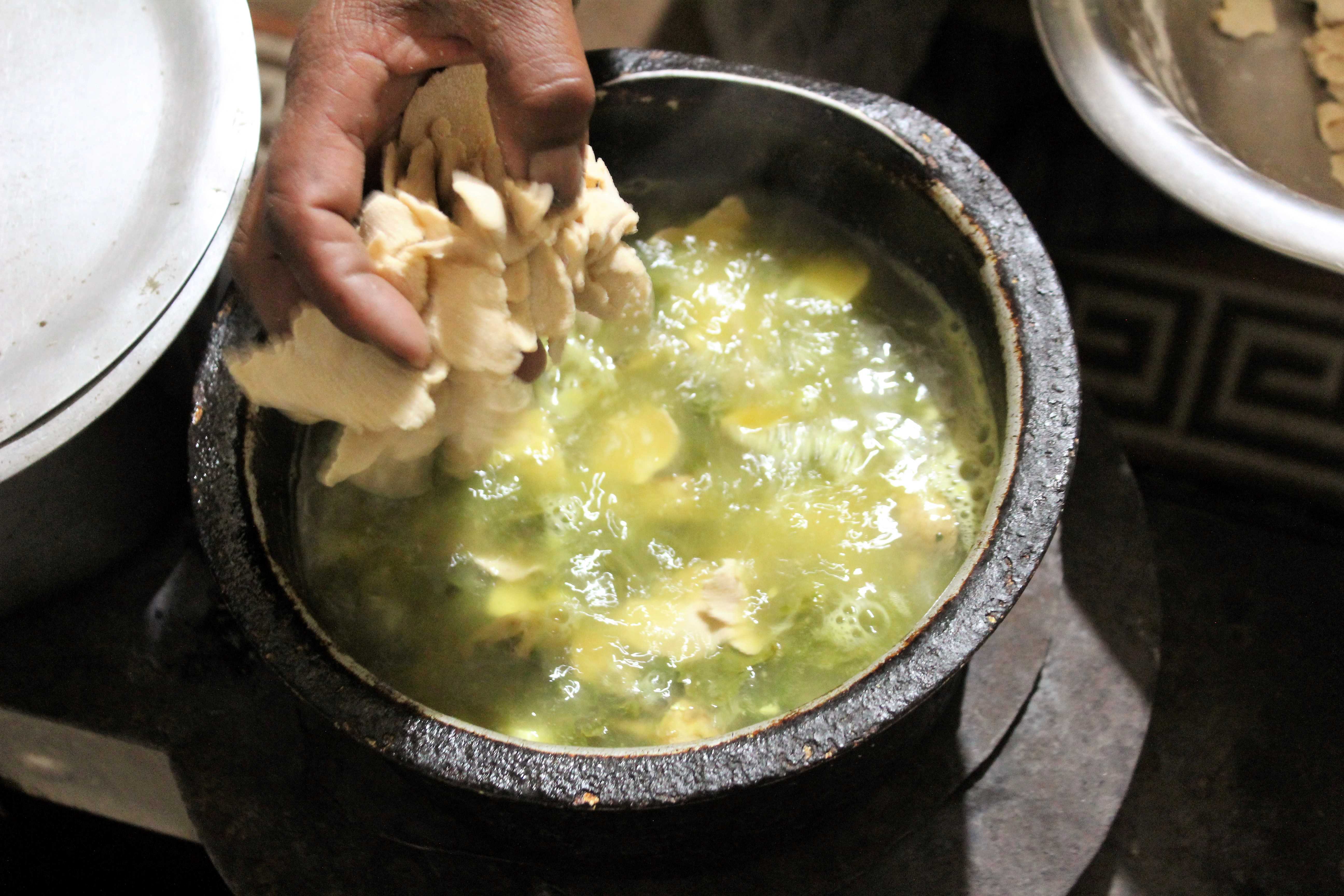
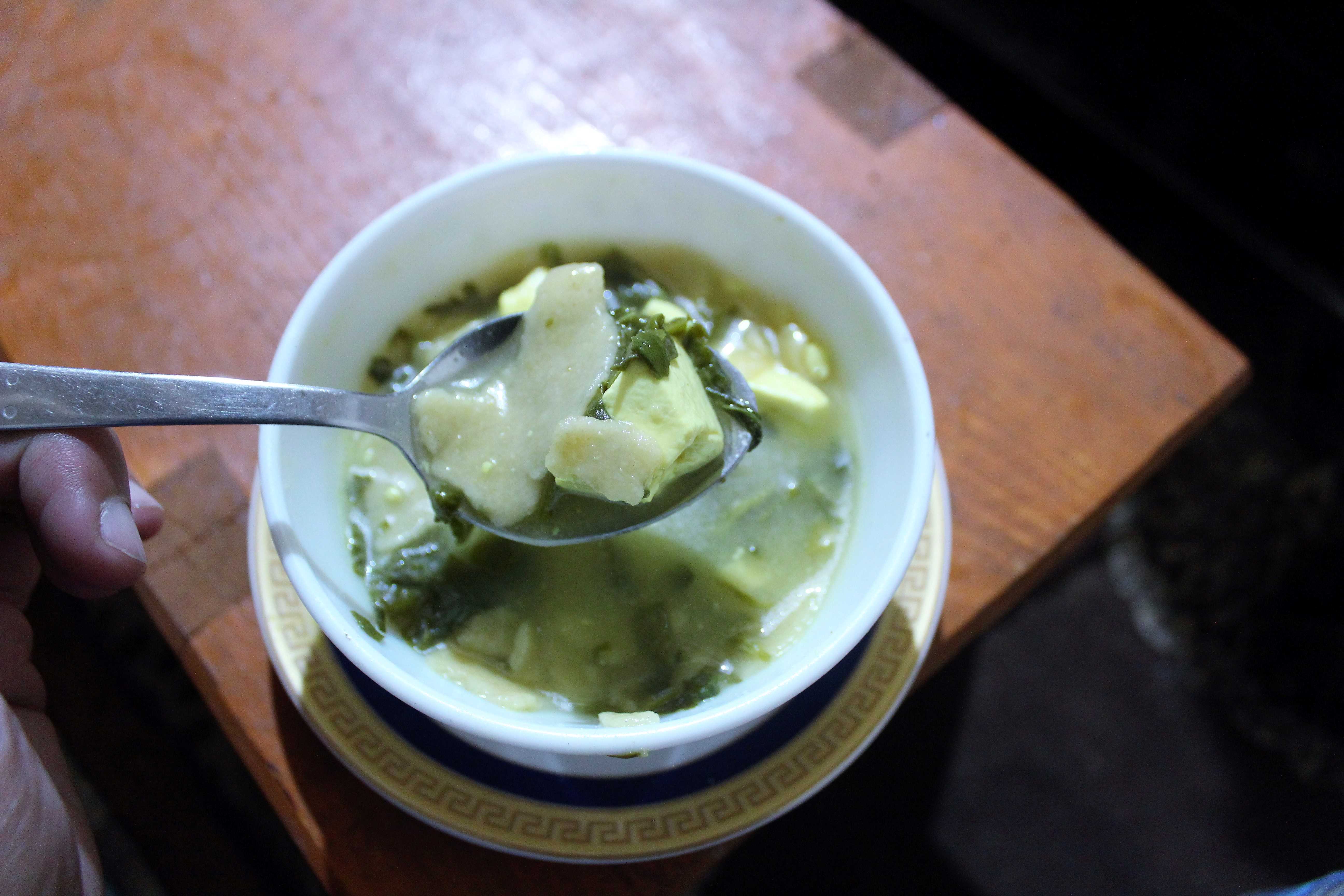
The mother prepares a traditional dish for dinner. It basically consists of a wheat dough, which she opens into a kind of chapati size, and then she shredded into pieces. These pieces she will drop into a pan filled of a kind of soup, prepared with whatever ingredients you want. We had ours with some green vegetables and homemade paneer. I am watching the whole process of preparing this dish and I am so happy about it. It is so exciting to be here, in this tiny room, in the middle of Ladakh, away from cities and life in society, immersing deeply in their culture.
Soon after eating, we go to sleep.

 10 Years Around the World